White Goods Retail Intelligence: The White Goods Retail Divide
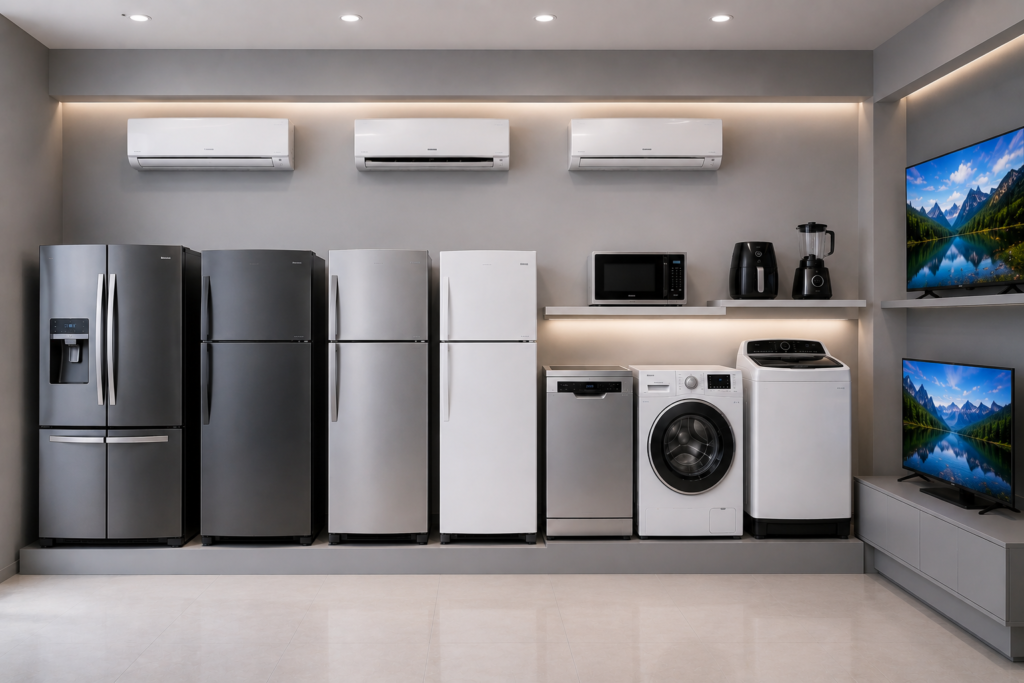
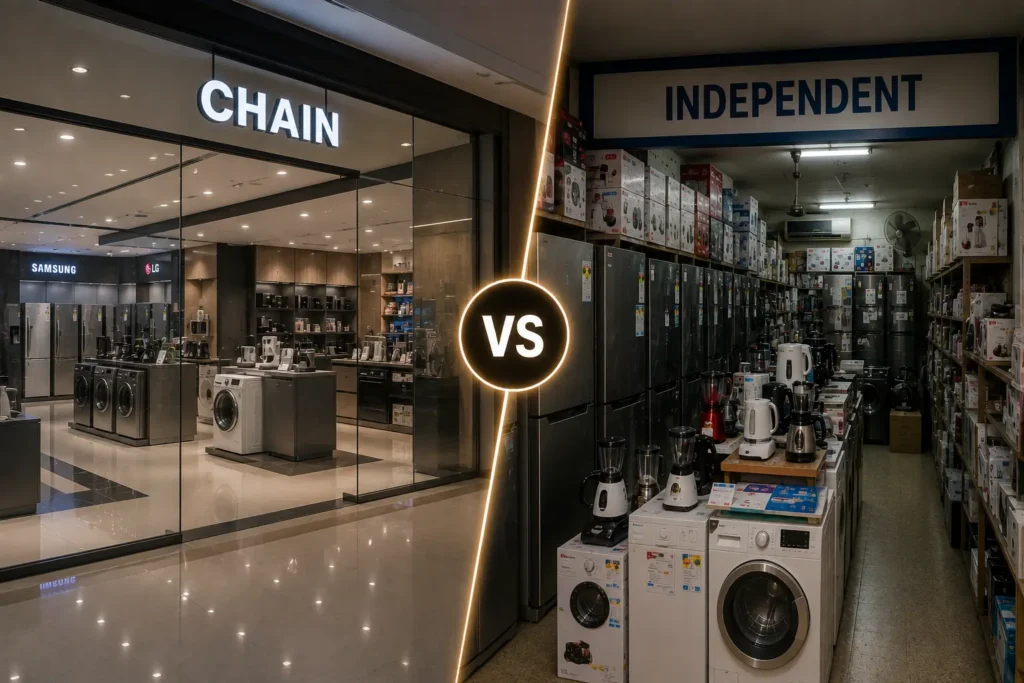
Research & Insights The White Goods Retail Divide July 20, 2026 The White Goods Retail Divide This edition of the LSE White Goods Retail Intelligence Series presents a comparative assessment of Mumbai’s organised chain retailers and independent retailers, examining how retail formats differ in product assortment, brand representation, retailer priorities and business strategy. Building on the findings from Volume 1: Inside Mumbai’s White Goods Retail Market, this edition shifts the focus from an overall market assessment to a comparative understanding of organised chain and independent retail formats. Developed using Le Soleil Enterprises’ retail audit methodology, the study explores how different retail environments respond to consumer demand while balancing inventory decisions, category breadth and commercial performance. Rather than viewing the market as a single retail ecosystem, this edition examines how retail format itself influences assortment planning, retailer confidence and long-term brand visibility across Mumbai’s white goods market. Comparing Chain and Independent Retailers One Consumer Market. Two Distinct Retail Strategies. Walk into two appliance stores in Mumbai, one a large organised chain and the other an independent neighbourhood retailer, and the difference becomes immediately apparent. While both compete for the same customer, they operate with remarkably different business priorities. Product assortment, brand representation and shelf space are shaped not only by consumer demand but also by the commercial realities of each retail format. Chain retailers build scale through wider category depth and premium product availability, while independent retailers focus on inventory efficiency and high-demand products that consistently deliver business performance. The Categories That Build Every Retail Store Core Categories Define Both Retail Formats Refrigerators, washing machines, air conditioners and cooking appliances form the foundation of both retail formats. These categories dominate showroom space because they represent the strongest and most consistent sources of consumer demand. Regardless of store size or ownership model, they remain the products retailers simply cannot afford to be without. Product Depth Creates the Difference The distinction between retail formats becomes increasingly visible beyond the core categories. Chain retailers maintain broader availability across premium refrigerator configurations, larger capacity washing machines and specialised air conditioning segments, creating a wider assortment designed to serve diverse customer requirements. Independent retailers, by comparison, concentrate on carefully selected product ranges that maximise inventory productivity while continuing to meet local market demand. Shelf Space Reflects Retail Confidence Brand Leadership Extends Beyond Product Availability Strong brands earn more than visibility. They earn retailer confidence. Samsung and LG continue to maintain leadership across multiple white goods categories, while Daikin strengthens its position within air conditioners and Pigeon dominates cooking appliances. Consistent brand representation across both retail formats demonstrates that retailer confidence becomes increasingly difficult for competitors to replace once it is established. Category Leadership Is Never Uniform Leadership changes from one category to another. Premium refrigerator segments reward different brands than entry level models. Air conditioners, washing machines and cooking appliances each develop their own competitive hierarchy based on consumer expectations, product expertise and retailer experience. Success therefore depends not on winning the entire market, but on building leadership where purchasing decisions are actually made. Every Stocking Decision Begins with Consumer Demand Shelf space remains one of retail’s most valuable commercial assets, and products rarely secure it by chance. Consumer demand continues to shape stocking decisions more than any other factor, followed closely by profitability, brand reputation and after sales support. Retailers consistently balance customer expectations with commercial performance, ensuring that every product occupying valuable showroom space contributes both to sales and long term business sustainability. Advertisements, distributors and company sales representatives continue to shape how retailers discover new products and evaluate emerging brands. Product visibility may create awareness, but sustained retailer engagement ultimately determines which brands secure long term shelf presence. Confidence Creates Competitive Advantage Retail confidence extends well beyond stocking decisions. Brands consistently selected as must-stock products also become the brands retailers recommend most frequently, and the products customers continue to prefer. Samsung maintains leadership across retailer preference, recommendation and customer preference within both chain and independent retail formats, while LG continues to reinforce its position as the strongest challenger across every major retail measure. Once retailer confidence is established, it becomes one of the most durable competitive advantages a brand can build. The Future of Retail Competition The divide between chain and independent retailers reflects two equally important approaches to serving the same market. One competes through category breadth, premium assortment and wider brand representation. The other succeeds through focused product portfolios, operational efficiency and a deep understanding of local demand. Neither strategy is inherently stronger. Each reflects the commercial realities of its retail environment. As Mumbai’s white goods market continues to evolve, competitive advantage will belong to the brands that understand these differences rather than treating retail as a single channel. Winning consumer demand may open the door, but earning retailer confidence across both retail formats will determine who secures long-term leadership. The broader assortment and category depth maintained by chain retailers uncover another layer of retail intelligence, one that extends beyond format comparison into category-specific strategy, brand competition and assortment optimisation. That deeper story forms the next chapter of this Retail Intelligence Series, offering a deeper comparison of leading organised chain retailers across Mumbai’s white goods market. Download PDF Skip to PDF content Authors Vikas Sahoo – Manager, Research & Operations Vikas Sahoo leads Research & Operations at Le Soleil Enterprises (LSE India), overseeing market intelligence and consulting engagements across diverse industries. He specializes in transforming data into actionable insights that enable businesses to strengthen customer understanding, improve performance, and make informed decisions. Vikas can be reached at vikas@lse-india.com Yash Bhise – Business and Data Analyst Yash Bhise plays a key role in delivering market intelligence and business consulting projects at Le Soleil Enterprises (LSE India). His experience spans customer experience measurement, retail and distribution analytics, competitive benchmarking, and strategic reporting, helping organizations identify growth opportunities, improve performance, and make informed business decisions. Yash can be reached at yash@lse-india.com