LSE White Goods Retail Intelligence
Volume 3
Inside Organised Retail
July 30, 2026
Inside Organised Retail
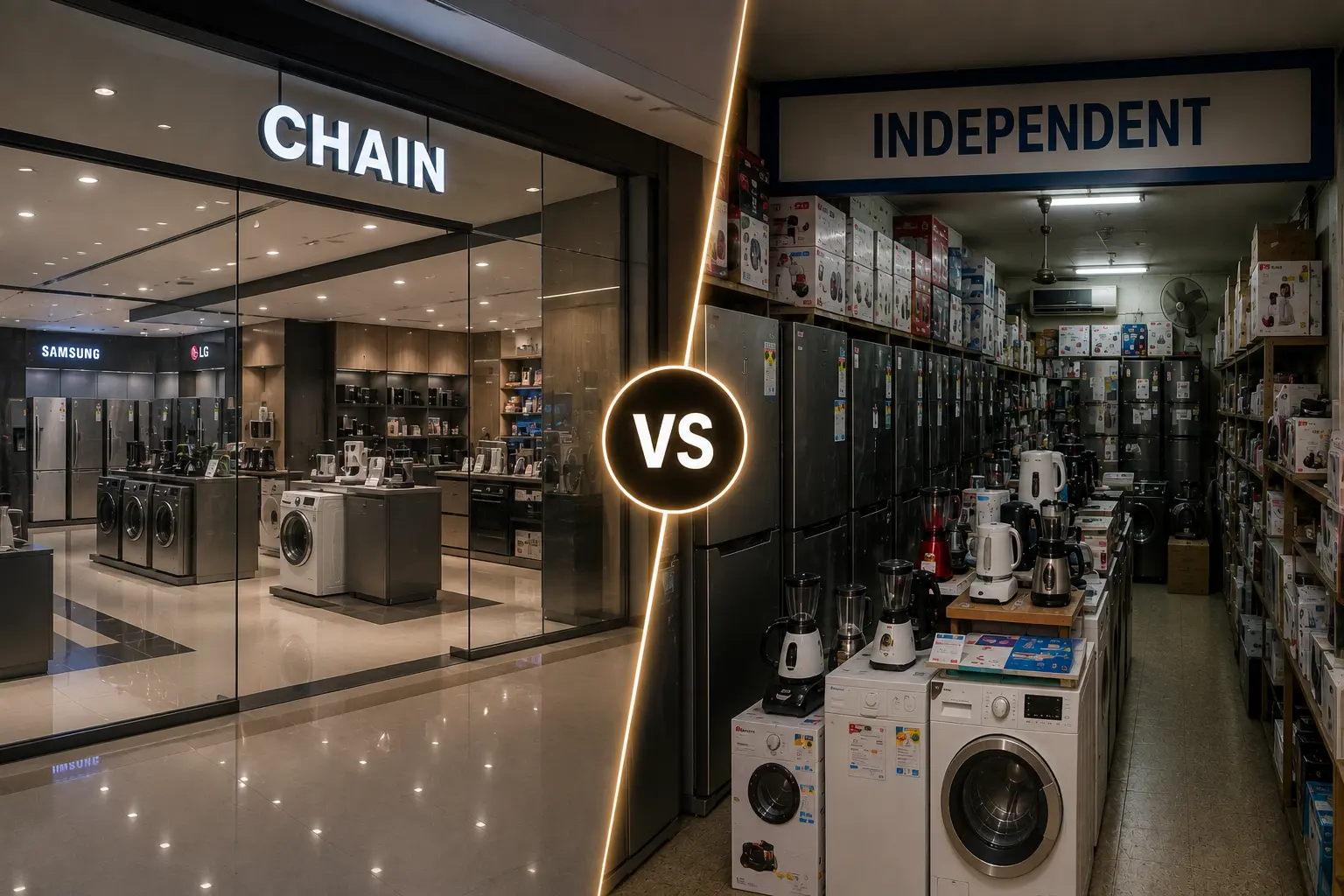
This edition of the LSE White Goods Retail Intelligence Series builds on the insights from the previous volumes by shifting the focus from retail format comparison to the operational strategies of organised retail. Developed using Le Soleil Enterprises’ retail audit methodology, the study examines three leading organised retail chains to understand how retailers differentiate through category leadership, merchandising priorities, commercial decision-making and brand strategy despite operating within similar product assortments and brand ecosystems. By exploring the operational choices that shape assortment planning, retailer confidence and competitive positioning, this edition provides an executive perspective on the factors that drive competitive advantage within Mumbai’s organised white goods retail market.
The New Retail Reality
Competitive Advantage Has Shifted Beyond Product Availability
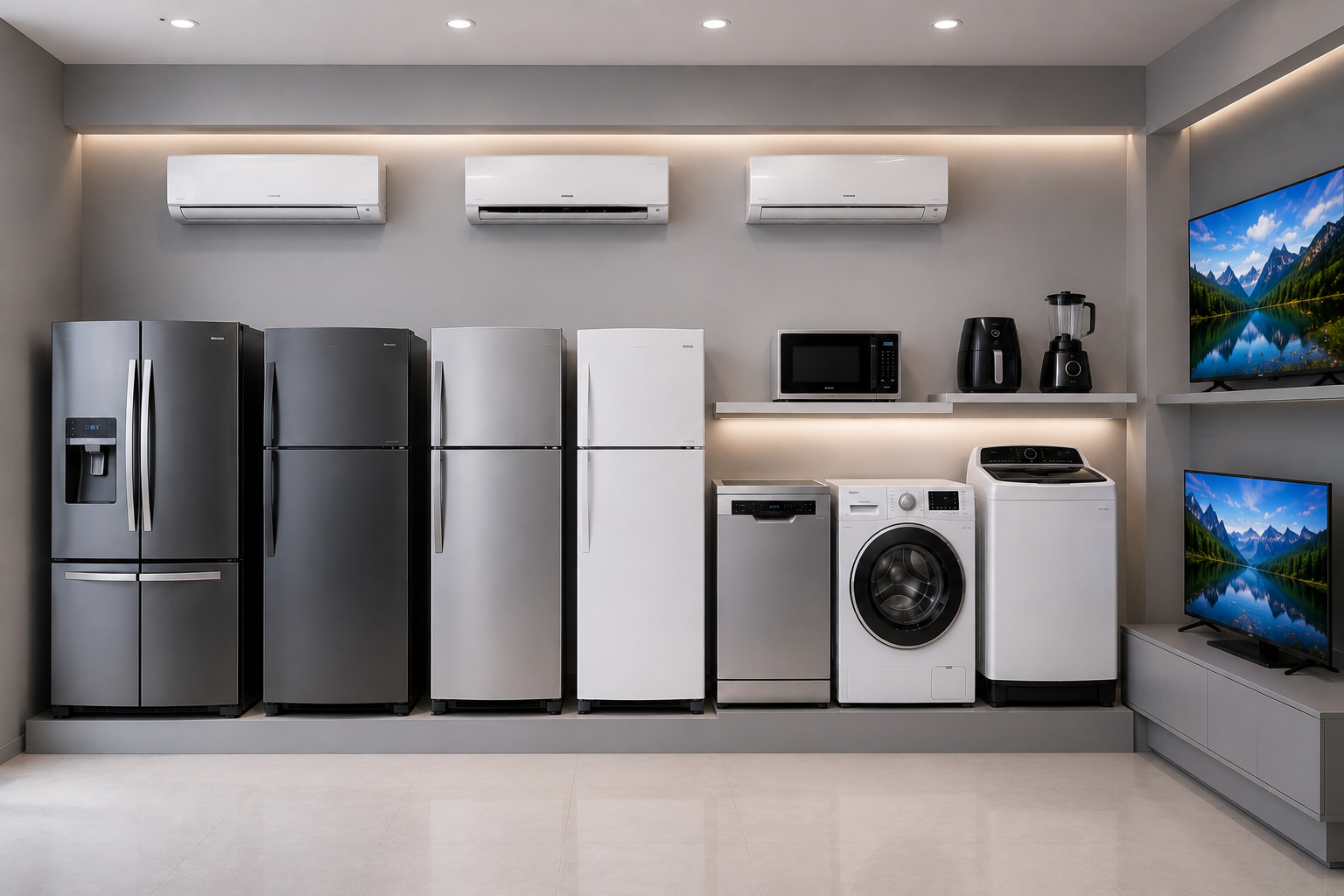
Leading organised retailers increasingly compete within a remarkably similar retail ecosystem. Core product categories, national brand portfolios and showroom formats have become highly standardised, making product availability alone insufficient to create meaningful competitive advantage. As organised retail matures, differentiation is increasingly defined by how retailers prioritise assortments, allocate shelf space and execute merchandising decisions.
The organised retail landscape now rewards execution rather than assortment breadth. While customers encounter many of the same brands and categories across leading retailers, the quality of assortment planning, merchandising strategy and retail execution has become the primary driver of competitive positioning.
Points of Differentiation
Category Leadership Creates Distinct Retail Identities
Similarity at the showroom level does not translate into identical retail strategies. Leadership shifts across product categories, with different retailers establishing stronger positions in refrigerators, air conditioners, washing machines and cooking appliances. Rather than pursuing category dominance across every segment, retailers build competitive advantage by strengthening leadership where customer demand, commercial opportunity and merchandising priorities intersect.
Category leadership therefore reflects more than product availability. It represents deliberate retail decisions that shape assortment depth, supplier partnerships and customer choice, allowing retailers with similar portfolios to develop distinctly different market positions.
Inside the Retailer’s Mind
Commercial Priorities Shape Every Merchandising Decision
Behind every assortment decision lies a structured commercial evaluation. Consumer demand, profitability, brand reputation and product availability influence every stocking decision, but the order of priority varies across retailers. These differences explain why retailers operating within similar competitive environments often develop unique merchandising strategies and category strengths.
Retailers also rely on multiple information sources when evaluating new products and emerging brands. Distributors remain the primary gateway for product discovery, supported by advertising, manufacturer engagement and retailer networks that collectively influence long-term merchandising decisions.
What All Retailers Agree On
Retail Confidence Converges Around Trusted Brands
While retailers differ in commercial priorities and category leadership, confidence consistently converges around a relatively small group of national brands. Samsung maintains its position as the must-have brand across organised retail, with LG reinforcing retailer confidence through strong business experience, peer recommendations and customer preference. Long-term retailer confidence is therefore built not only through consumer demand but through sustained commercial performance across multiple dimensions of the retail relationship.
Executive Perspective
Retail Competition Is Increasingly Defined by Execution
Organised retail is evolving towards a common brand ecosystem, where competitive advantage depends less on expanding product portfolios and more on category execution, merchandising priorities and commercial decision-making. Retailers increasingly differentiate through the categories they strengthen, the commercial factors they prioritise and the consistency with which they translate those priorities into the customer experience.
Understanding these operational differences provides manufacturers with a stronger foundation for building retailer partnerships, developing category-specific strategies and aligning commercial initiatives with the realities of organised retail. As competition continues to mature, sustainable growth will increasingly belong to brands that understand how retailers operate, rather than simply what retailers stock.
Authors
Vikas Sahoo – Manager, Research & Operations
Vikas Sahoo leads Research & Operations at Le Soleil Enterprises (LSE India), overseeing market intelligence and consulting engagements across diverse industries. He specializes in transforming data into actionable insights that enable businesses to strengthen customer understanding, improve performance, and make informed decisions.
Vikas can be reached at vikas@lse-india.com
Yash Bhise – Business and Data Analyst
Yash Bhise plays a key role in delivering market intelligence and business consulting projects at Le Soleil Enterprises (LSE India). His experience spans customer experience measurement, retail and distribution analytics, competitive benchmarking, and strategic reporting, helping organizations identify growth opportunities, improve performance, and make informed business decisions.
Yash can be reached at yash@lse-india.com
Disclaimer
This report has been prepared by Le Soleil Enterprises (“LSE”) for general informational and knowledge purposes only. It is based on information, data and sources considered relevant and available to LSE at the time of preparation. While reasonable care has been taken to ensure the quality and reliability of the information presented, LSE does not warrant or represent that the information is complete, accurate, current or free from error or omission.
The findings, estimates, observations and views presented in this report are intended to provide general market and business insights and should not be construed as professional, financial, investment, legal, tax, commercial or other advice, nor should they be regarded as a recommendation or endorsement of any particular course of action.
The information contained in this report may be subject to change as market conditions, business environments, data availability and other relevant factors evolve. Users should undertake their own assessment, validation and due diligence before relying on any information contained herein or making any business, financial, investment or other decision.
LSE shall not be responsible or liable for any loss, damage, cost, expense or other consequence, whether direct, indirect, incidental, consequential or otherwise, arising from or in connection with the use of, reliance upon, or decisions or actions taken on the basis of this report or any information contained herein, to the maximum extent permitted by applicable law.
By accessing or using this report, the user acknowledges that the information is provided on an “as is” basis and accepts responsibility for determining the appropriateness and suitability of the information for their particular circumstances.